Picture this exact scenario. You just wrapped up a grueling ten-hour wedding shoot. You sit down at a coffee shop to transfer gigabytes of crucial 4K footage. Suddenly, your flimsy plastic accessory overheats. It drops the connection. Worse, it snaps right inside your laptop bag. This frustrating failure is all too common for creators and field engineers alike. Upgrading to a metal enclosure seems like an obvious fix. But does it actually translate to a longer lifespan? Or is it merely an aesthetic choice?
The physical demands placed on a modern USB card reader have skyrocketed. Advanced memory formats now push unprecedented transfer speeds. Standard plastic models remain budget-friendly, but metal-housed alternatives significantly outlast their polymer counterparts. This longevity comes down to superior physical resilience, enhanced structural integrity, and critical heat dissipation capabilities required for intensive data workflows.
Key Takeaways for Hardware Longevity
Superior Structural Durability: Metal enclosures protect delicate internal circuitry from drops, crushes, and travel wear far better than brittle plastics.
Advanced Heat Dissipation: High-performance data transfers generate intense heat. An alloy chassis acts as a natural heat sink. This prevents thermal throttling and extends the life of your memory chips.
Solder Joint Protection: Rigid metal housings prevent the internal circuit board from flexing. This eliminates the primary cause of connector failure.
Long-Term Value: Despite a slightly higher upfront cost, premium metal accessories offer a superior return on investment by outlasting multiple cheap replacements.
The Core Differences: Material Science Matters
To understand why one outlasts the other, we must look at the manufacturing disparities. The choice of exterior shell dictates how the device handles the invisible stresses of daily operation.
Polymer materials have long been the industry standard for entry-level models. They are incredibly cheap to produce. Injection-molded plastic can be churned out by the thousands at a fraction of the cost. For the casual user transferring a few JPEG photos to a home computer, these lightweight options are often sufficient. However, plastic degrades. It reacts poorly to temperature fluctuations and physical stress.
Furthermore, premium tech accessories utilize anodized aluminum alloys. This material is specifically chosen for its industrial-grade strength. Unlike standard plastics, an alloy chassis is often CNC-machined or extruded. This creates a rigid, protective vault for the sensitive Printed Circuit Board hidden inside.
Industry Trends: The Shift Toward Metal Enclosures
Looking at broader industry movements, recent market analyses reveal a significant pivot in peripheral manufacturing. Search trends and tech news highlight a growing dissatisfaction with disposable plastic accessories. As file sizes balloon with 8K video and high-resolution RAW images, accessory makers are abandoning polymer shells. Industrial-grade alloys are now the baseline. Professionals simply can no longer afford equipment failure in the field. The trend is clear. Durability and thermal management now outweigh minimal cost savings.
![Aluminum vs Plastic Card Reader Durability]()
Durability Face-Off: Surviving the Daily Grind
Toss a polycarbonate adapter into a heavy equipment backpack. Its days are numbered. When a plastic device is dropped on a hard studio floor, the rigid material absorbs the shock poorly. Over time, UV exposure and general wear cause plastics to degrade. They become brittle and eventually crack. Conversely, metal maintains its structural integrity. It might suffer a cosmetic dent from a severe drop, but the internal components remain fully operational.
As a hardware specialist, I constantly examine failed units on the workbench. The main controller chip rarely fails first. The true culprit is usually micro-fractures in the solder joints. Every time you plug in or yank out the device, torque hits the internal board. A rigid metal housing prevents the internal board from flexing under this pressure. The unyielding nature of a metal shell directly prolongs the functional life of the ports.
To clearly illustrate these engineering differences, consider the core metrics below.
| Engineering Metric | Aluminum Enclosure | Plastic Enclosure |
| Thermal Conductivity | Excellent. Actively pulls heat away from chips. | Poor. Acts as an insulator, trapping heat inside. |
| PCB Flex Resistance | High. Prevents solder joint fractures. | Low. Bends easily under connector torque. |
| Impact Tolerance | High. Dents upon impact but protects internals. | Low. Cracks and shatters under heavy pressure. |
| Long-Term ROI | Superior. Lasts for years of daily professional use. | Poor. Requires frequent replacement due to wear. |
Thermal Dynamics: Why a Metal Chassis is Non-Negotiable
Physical impacts are only half the battle. Heat is the silent killer of tech accessories. The physics of modern data transfer are unforgiving. Moving massive video files draws significant electrical power. This rapid exchange of data generates intense thermal energy. Inside a sealed plastic box, this heat has nowhere to go. It essentially bakes the delicate microchips.
This is where material science plays a pivotal role. Plastic is an insulator. It traps heat. Aluminum boasts excellent thermal conductivity. For any high speed reader, managing this thermal output is critical. The metal chassis physically pulls heat away from the memory card and the internal controller chip. It actively dissipates it into the surrounding air. If your device feels warm to the touch after a massive file dump, do not panic. That warmth is tangible proof that the heat sink is working exactly as engineered.
When electronic components get too hot, they engage a self-preservation mechanism known as thermal throttling. The device intentionally slows down to reduce heat generation. This turns a lightning-fast transfer into an agonizing wait. Because an alloy enclosure constantly sheds heat, it allows the internal controller to sustain peak transfer speeds. It also protects the actual memory cards from warping or degrading under extreme temperatures.
Actionable Selection Guide: Finding the Right Fit
Stop guessing when it comes to upgrading your gear. You need to select a model that perfectly aligns with practical field requirements. Look past the marketing jargon and focus on the actual hardware specifications.
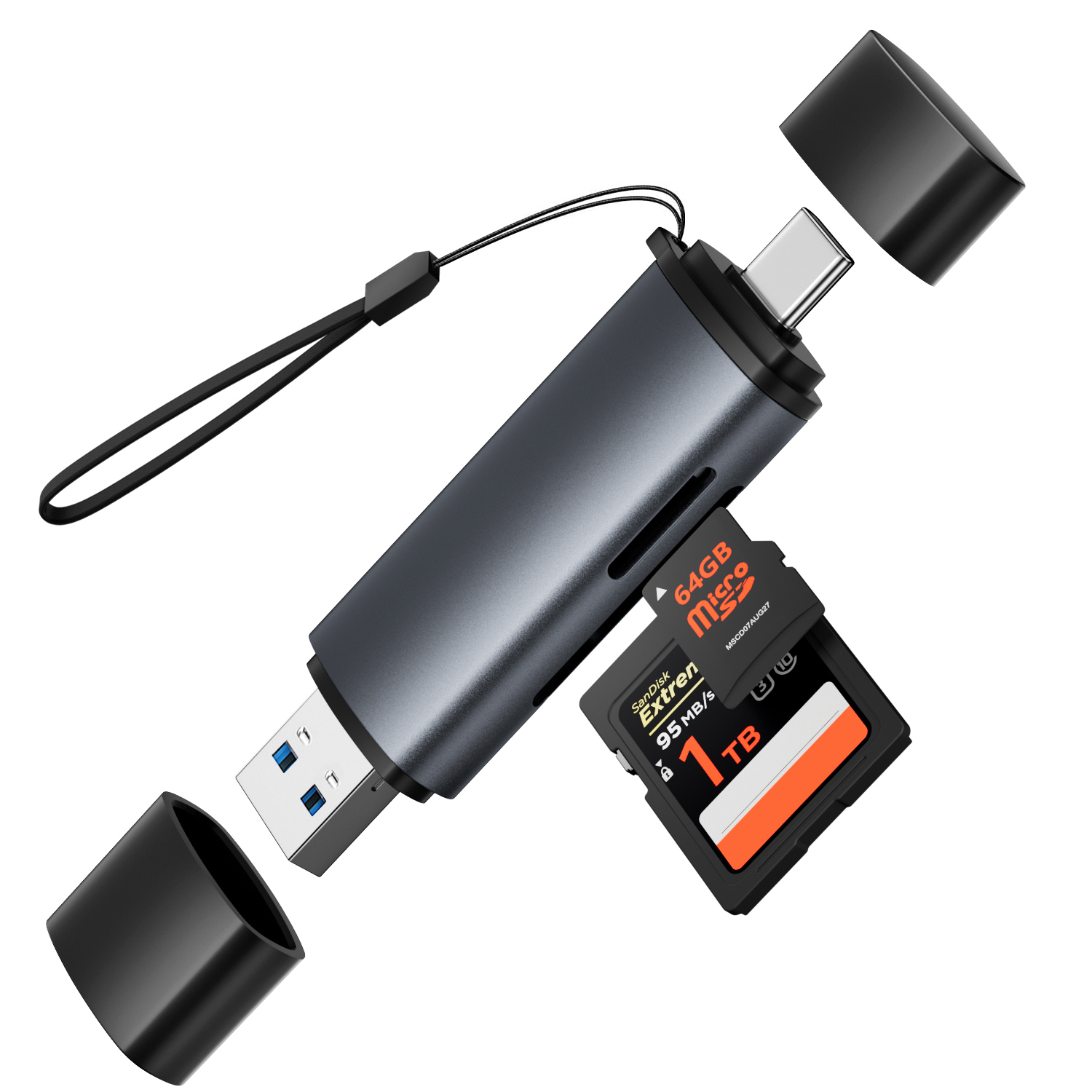
First, prioritize interface versatility. A modern workflow demands adaptability across different machines. Look for a 2-in-1 dual plug Type-C and USB-A design. This dual-plug approach eliminates the need for extra dongles. Next, ensure it features both SD and TF slots to cover standard and micro formats seamlessly. Finally, check the sustained transfer protocols. A stable 480Mbps high-speed data transfer rate provides exceptional reliability for daily professional tasks, ensuring your files move swiftly without overwhelming the controller.
You can find these exact parameters integrated into a robust aluminum card reader. By matching these specific specs, you guarantee a device that delivers both performance and longevity.
Conclusion: Making the Smart Investment
The debate between materials is easily settled by real-world engineering demands. Metal accessories objectively outlast their plastic counterparts. They actively resist physical crushing, prevent internal circuit board flexing, and manage intense thermal loads effectively. For anyone working with massive files or traveling frequently, the durability and speed consistency of a metal-housed card reader make it the uncompromising winner.
Do not let a cheap plastic peripheral be the bottleneck in your professional workflow. Evaluate your current setup today. If you need a reliable, thermally efficient solution equipped with dual Type-C and USB-A plugs, SD and TF slots, and stable 480Mbps transfer speeds, explore the premium hardware options at Yuanshan Tech. Upgrading to a professional-grade metal accessory is the most reliable investment you can make for your data security.
Frequently Asked Questions
Do metal enclosures get too hot to touch?
They can indeed get warm during heavy data transfers. This is a deliberate design feature. The metal acts as a heat sink. It actively pulls dangerous thermal energy away from your memory card and internal processing chips to prevent permanent damage.
Will a metal peripheral scratch my laptop?
While metal is inherently harder than plastic, high-quality accessories feature smooth, rounded edges. They use specialized anodized finishes designed to prevent scratching other devices. However, it is always a best practice to store metal peripherals in a separate pocket.
Is a fast transfer device always made of metal?
Not always, but the most reliable ones usually are. Advanced formats generate immense heat during operation. Reputable manufacturers prefer metal enclosures to ensure the device can maintain sustained high speeds without suffering from thermal throttling.
How long does a typical reader last?
A cheap plastic model might survive one to two years under heavy use before the port bends or the casing cracks. In stark contrast, a well-built metal model can easily last five to ten years. It frequently outlives the computer you originally purchased it to accompany.
Why does my plastic reader disconnect randomly during large transfers?
Random disconnections are typically caused by two factors. The first is thermal throttling, where the overheated chip shuts down to protect itself. The second is micro-fractures in the internal solder joints caused by the plastic casing bending. Metal enclosures solve both of these engineering flaws.
Does the exterior material actually affect data transfer speeds?
Yes, indirectly. While the internal chip dictates the maximum theoretical speed, the exterior material dictates how long that speed can be sustained. Plastic traps heat, forcing the chip to slow down. Metal dissipates heat, allowing the chip to operate at maximum speed for much longer periods.