Securing a competitive unit price on consumer electronics is only half the procurement battle. For multi-port devices, margin erosion typically occurs post-purchase due to high Return Merchandise Authorization (RMA) rates and poor firmware support. You might secure an incredible upfront deal, but those savings evaporate quickly when end-users start returning faulty hardware.
In the Bottom-of-Funnel supplier evaluation phase, assessing a manufacturer’s post-sale commitment is critical for mitigating long-term financial risks. Hardware buyers must look past the initial physical sample. They need to thoroughly analyze the operational resilience and engineering accountability of their chosen manufacturing partner. A lack of post-sale support can quickly turn a profitable product line into a logistical nightmare.
Before signing a purchase agreement with a Docking Station Supplier, buyers must enforce strict contractual terms covering defect thresholds, software maintenance, and return logistics. This comprehensive approach ensures predictable profit margins. This guide details the specific after-sales clauses you need to negotiate to protect your brand reputation and bottom line.
Key Takeaways
- Defect Allowances: Negotiate Acceptable Quality Limit (AQL) standards and Dead on Arrival (DOA) replacement terms before mass production.
- Firmware Longevity: Mandate ongoing OS compatibility updates (Windows/macOS) as part of your technical support agreement.
- Logistics Liability: Clearly define which party bears the freight and tariff costs for batch returns or RMA replacements.
- Buffer Stock: Secure an agreement for 1-2% spare units included with the main shipment to handle immediate customer replacements locally.
Moving Beyond Unit Price: Why After-Sales Terms Dictate Long-Term Profitability
Business-to-business buyers often calculate their Return on Investment based purely on Free On Board (FOB) pricing. They frequently ignore the exponential cost of handling end-user returns for complex PC peripherals. Evaluating a proposal strictly on the initial unit cost represents a massive procurement blind spot. You must consider the entire lifecycle of the hardware.
Docking stations face heavy thermal stress and constant operating system compatibility shifts. They process power delivery, high-resolution video outputs, and data transfer simultaneously. A supplier offering low upfront costs but zero post-sale accountability will ultimately destroy downstream brand reputation. When devices overheat or drop video signals, the consumer blames your brand, not the obscure factory that built it.
Your ultimate success criteria should be a finalized vendor contract. This agreement must legally shift the financial burden of inherent manufacturing defects or chipset failures back to the original manufacturer. If a batch of 5,000 units experiences a 4% failure rate due to a faulty network controller, you should not absorb the cost of refunding angry customers. A robust post-sale contract acts as an insurance policy against poor quality control.
To avoid severe margin erosion, you must watch out for these common hidden costs:
- Reverse logistics fees for cross-border shipping of defective batches.
- Lost sales momentum due to prolonged stockouts during an RMA process.
- Customer support labor costs spent troubleshooting undocumented firmware bugs.
- Scrap costs for units that fail slightly outside a poorly negotiated warranty window.
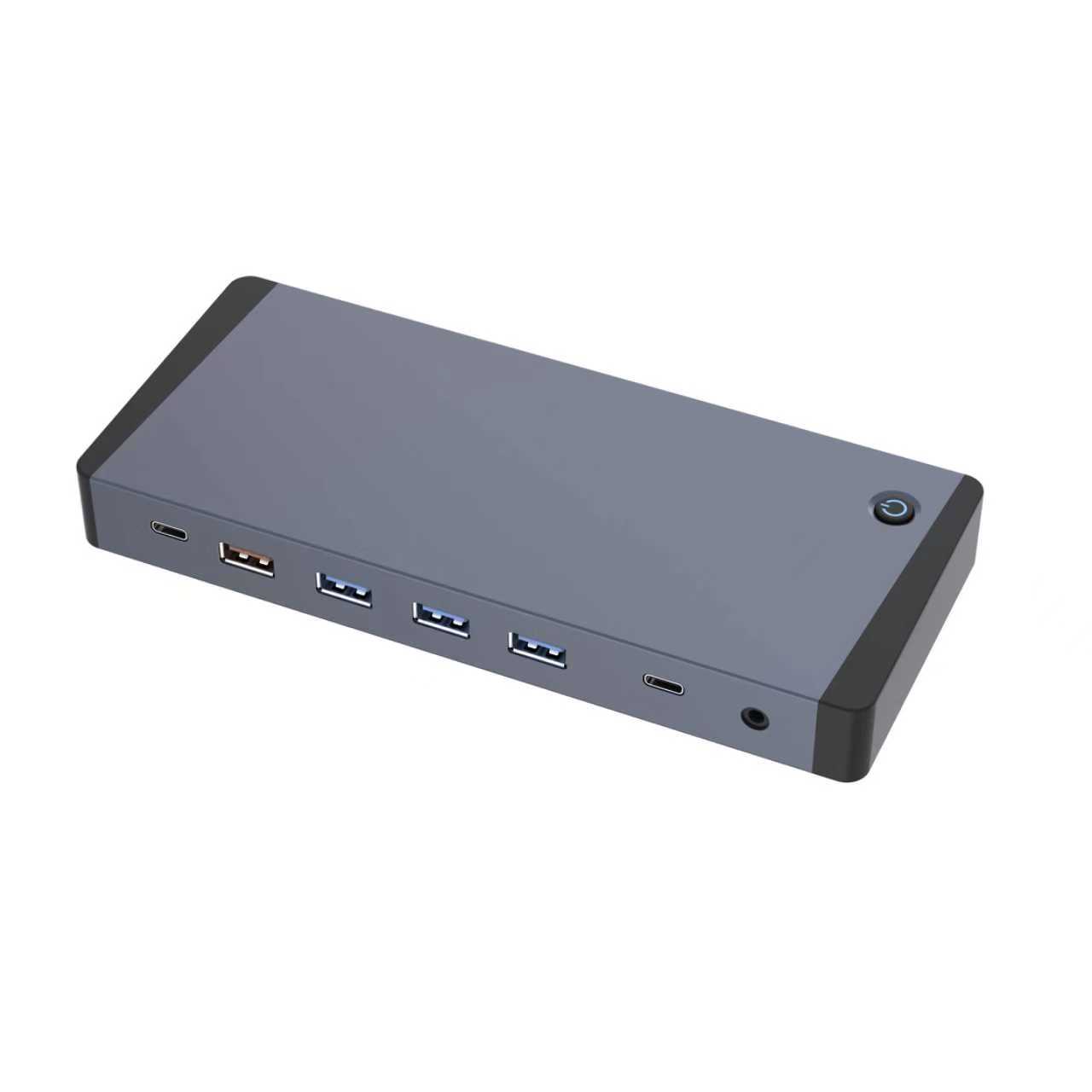
Structuring the Docking Station Warranty for Hardware Durability
Negotiating the precise parameters of your hardware coverage is essential. Many buyers accept boilerplate factory warranties without realizing the terms heavily favor the supplier. You must proactively dictate the boundaries of this coverage.
First, negotiate a baseline 12-to-24-month docking station warranty from the exact date of delivery, rather than the date of shipment. Ocean freight and customs clearance can take up to 45 days. If the warranty begins upon vessel departure, you lose a significant portion of your coverage period before the goods even hit your warehouse shelves.
Next, demand component-level specificity in the contract. Vague coverage often leads to denied claims. Ensure the agreement explicitly covers early Printed Circuit Board Assembly (PCBA) failures, port degradation, and power delivery malfunctions. For example, loose Type-C connectors are a known industry issue. Your contract must define these physical degradation issues as covered manufacturing defects, not just "normal wear and tear."
Finally, implement a Buffer Stock Clause. Cross-border RMA shipping is slow and expensive. Negotiate a standard 1% to 2% Free of Charge (FOC) spare unit allowance per order. The factory ships these extra units alongside your main production batch. When a customer reports a dead unit, you can instantly ship them a replacement from this buffer pool. It drastically improves your customer service response time while eliminating the need to wait for a factory replacement.
Defining the USB C Hub Return Policy and Defect Thresholds
Manufacturing yields are never perfect. Establishing clear, mathematical boundaries for acceptable failures prevents disputes later. You must define what constitutes a minor anomaly versus a systemic disaster.
Establish strict Acceptable Quality Limit (AQL) thresholds. A standard baseline for complex consumer electronics sits between 1.0% and 1.5%. Anything exceeding this rate suggests a core flaw in the assembly process or component sourcing. If the defect rate crosses this threshold, your contract should include an automatic batch recall clause. This forces the manufacturer to take responsibility for systemic failures.
Dead on Arrival (DOA) protocols require equal attention. Define the timeframe for identifying DOA units. A standard window is typically 30 days post-receipt at your distribution center. You need a clear USB C hub return policy for devices that fail immediately upon unboxing. The factory must replace these units unconditionally without subjecting you to lengthy troubleshooting questionnaires.
When OEM after sales terms require shipping defective units back to the factory for analysis, you must address logistics liability. Stipulate clearly who pays for the shipping. We strongly recommend making the supplier absorb two-way freight costs and potential customs duties for systemic batch failures. If they refuse, suggest a credit note system where they refund the value of the defective units without requiring physical returns.
| Defect Category | Threshold Example | Supplier Contractual Action Required |
| Dead on Arrival (DOA) | Within 30 Days | Immediate 1-for-1 replacement or full credit note. |
| Minor Defect Rate | Up to 2.5% | Drawn from the 2% FOC buffer stock inventory. |
| Major Batch Failure | Over 1.5% | Trigger batch recall; supplier absorbs two-way freight. |
Software Scalability: Securing Supplier Technical Support
Hardware durability only solves half the equation. Multi-display docking stations rely heavily on intricate firmware to communicate with host laptops. As Apple and Microsoft release annual operating system updates, hardware that worked perfectly in September can suddenly break in October.
Mandate ongoing OS compatibility updates. Models utilizing DisplayLink or Thunderbolt technology demand frequent driver optimizations. Your manufacturer must maintain an active engineering team capable of patching firmware when major OS patches roll out. Hardware is useless if the software driving it becomes obsolete.
To enforce this, you must define acceptable turnaround times for supplier technical support. Do not accept vague promises of "prompt assistance." Structure your Service Level Agreement (SLA) with strict timeframes:
- Acknowledgment Phase: Require a 24-hour response confirming receipt of the bug report and log files.
- Identification Phase: Mandate a 48-hour engineering response for firmware bug identification and replication.
- Resolution Phase: Require a beta patch or viable workaround within 7 to 10 business days for critical failures.
Additionally, consider custom software tooling. If you are white-labeling proprietary management software, such as a MAC Address Pass-Through tool for enterprise clients, the supplier must commit to maintaining that codebase. Ensure they pledge lifecycle support matching the hardware warranty. If they stop updating the utility, your enterprise clients will quickly look for alternative brands.
End-of-Life (EOL) Protection and Component Scarcity
The semiconductor industry frequently experiences supply shocks and rapid generational shifts. Network controllers, audio chips, and power delivery ICs regularly reach End-of-Life (EOL). When a core component vanishes from the market, your production line can grind to an abrupt halt.
Chipsets from manufacturers like Realtek or VIA Labs (VL) face these cycles constantly. You need proactive risk management strategies embedded in your contract. Do not let a supplier surprise you with a forced redesign right before a major holiday shipping season.
Negotiate a formal component guarantee. Require a minimum 6-to-12-month advance EOL notification. This window gives you enough time to stockpile existing inventory while validating the next-generation prototype. It prevents sudden gaps in your retail availability.
Furthermore, demand replacement parity. If the original design can no longer be manufactured due to component scarcity, the supplier must provide a solution. Require them to engineer a drop-in replacement PCBA or offer an upgraded model at the same negotiated cost. The factory should bear the engineering costs associated with redesigning the board to accommodate a new chip.
Shortlisting Framework: Validating the Supplier’s Commitments
Contractual clauses are meaningless if the supplier lacks the operational infrastructure to honor them. During the final shortlisting phase, you must validate their claims. Do not take their SLA documents at face value. Test their systems before you issue the first large-scale Purchase Order.
Start with historical data auditing. Ask shortlisted candidates for historical RMA reports. Request anonymous case studies demonstrating how they handled a recent mass-defect scenario. A reputable factory will transparently explain a past failure and outline the corrective actions they took. If a supplier claims they have a 0% failure rate, they are lying. Avoid them entirely.
Next, implement active testing during the sampling phase. Intentionally request a firmware tweak. Report a mock bug during the prototype phase. Use this exercise to measure their actual engineering response times against their promised SLAs. If they take three weeks to answer a basic firmware query during the honeymoon phase, they will likely ignore you entirely after they receive your money.
Below is a comparative chart outlining the difference between passive and active evaluation methods:
| Evaluation Method | Passive Buyer Approach | Active Validation Approach |
| Defect Assessment | Asks supplier for their defect rate. | Requests sanitized RMA reports from past quarters. |
| Firmware Verification | Accepts "Yes, we support Mac" verbally. | Reports a mock OS bug to time the engineering response. |
| Warranty Review | Signs standard factory template. | Drafts custom Quality Control annex with buffer stock terms. |
Your next step is purely administrative but vital. Draft a comprehensive Quality Control and After-Sales annex. Append this document to the master manufacturing agreement. Ensure both parties sign and stamp it before you wire the initial deposit.
Conclusion
Evaluating a manufacturing partner requires looking far beyond the aesthetic quality of a physical sample. You must analyze their operational resilience and their willingness to share downstream risks. A cheap unit price means nothing if you have to absorb massive refund costs later.
Robust warranties, clear RMA logistics, and guaranteed firmware support serve as your primary defense mechanisms. They are non-negotiable insurance policies protecting you against margin erosion and long-term brand damage. Do not compromise on these clauses.
Move confidently to the contract drafting phase. Request the standard SLA from your top suppliers immediately. Compare their boilerplate terms against the rigorous framework outlined above, and push back on any clause that shifts undue liability onto your shoulders.
FAQ
Q: What is a standard Acceptable Quality Limit (AQL) for docking stations?
A: Most reputable B2B electronics suppliers agree to a major defect rate of 1.0% to 1.5% and a minor defect rate of 2.5% to 4.0%. Establishing these AQL parameters before production ensures you have legal recourse if a batch exhibits widespread functional failures upon arrival.
Q: Who pays for shipping on defective OEM units?
A: This is highly negotiable. Standard terms often require the buyer to pay return shipping, while the supplier pays to send the repaired unit. However, high-volume buyers should negotiate for the supplier to cover all freight if the batch defect rate exceeds the agreed AQL.
Q: How long should a supplier guarantee firmware updates?
A: For multi-display docking stations, buyers should negotiate a minimum of 2 to 3 years of firmware support. This timeframe ensures hardware remains fully compatible with annual macOS and Windows updates, preventing the device from becoming prematurely obsolete.