Sourcing consumer electronics carries immense brand risk today. You need reliable hardware partners to succeed in a fiercely competitive market. Modern consumers expect seamless plug-and-play functionality from their devices. A poorly manufactured hub can cause frustrating peripheral dropouts during critical tasks. It might trigger severe thermal throttling under heavy data loads. It can even inflict irreversible power-delivery damage to high-value host devices like expensive laptops or tablets. Distinguishing a genuine producer from a mere trading middleman remains a significant challenge for buyers. You must rigorously verify their technical competence and quality control before committing resources to large orders. How do you ensure they meet your exact standards? This article provides a systematic, evidence-based framework for evaluation. You will learn how to audit potential suppliers and assess strict engineering standards. We will guide you step-by-step through protecting your brand’s reputation when procuring these essential connectivity tools.
Key Takeaways
- Identify Factory Type: Establish whether you need an off-the-shelf private label partner or a true OEM hub factory capable of custom PCBA (Printed Circuit Board Assembly) design.
- Audit for End-User Risks: Evaluate the manufacturer’s thermal management engineering and chipset selection to prevent common consumer complaints (e.g., overheating and display flickering).
- Verify Compliance Independently: Never accept self-reported certifications; independently verify USB-IF, CE, FCC, and RoHS documentation.
- Run a Phased Sample Test: Utilize a strict hub manufacturer checklist starting from initial engineering samples through to a pilot run before signing a mass production contract.
Define Your Sourcing Model: Private Label vs. OEM Hub Factory
Brands often mismatch their budget and timeline expectations early in the process. They frequently partner alongside the wrong type of supplier entirely. To prevent this costly error, you must define your sourcing model immediately. Buyers typically choose between two primary solution categories.
- White-Label/Private Label: Best suited for fast go-to-market strategies. The factory already owns the plastic mold. They already engineered the internal PCBA. You simply customize the logo, packaging, and exterior casing finish. This approach reduces initial costs significantly. It removes expensive tooling fees from your balance sheet.
- Custom OEM/ODM: You need this route when developing proprietary features. Think of specific port configurations, high-end docking stations, or a unique thermal chassis. It requires a higher R&D budget. It also demands considerably longer lead times. Signal integrity testing for 10Gbps data lanes requires specialized equipment. Custom designs undergo rigorous structural validation.
Ask suppliers directly for their ratio of in-house engineers to assembly line workers. A true OEM hub factory will have dedicated hardware and firmware engineering teams. They offer far more than basic manual assembly capabilities. You can spot a trading company quickly by their lack of engineering staff. Real factories invest heavily in their R&D departments. They employ dedicated layout engineers for complex PCB designs.
| Sourcing Model | Time to Market | Tooling & R&D Cost | IP Ownership | Best Use Case |
| Private Label | 1-2 Months | Low / None | Factory | Fast retail entry, budget constraints |
| Custom OEM | 4-6 Months | High | Brand | Proprietary features, premium market |
Technical Competence: Engineering for Heat, Protocols, and Power Delivery
Let us do a quick reality check regarding end-user complaints. Consumer forums consistently highlight three massive points of failure in cheap hubs. Users report dangerous heat levels, dropped monitor connections, and completely bricked host devices. Faulty Power Delivery controllers usually cause this severe hardware damage. You must assess the technical competence of your chosen USB C Hub Manufacturer strictly.
Evaluate their engineering capabilities across these three distinct dimensions:
- Chipset Sourcing: Which IC brands do they partner alongside? Reliable factories use industry leaders like Realtek, VIA Labs, or DisplayLink. Premium silicon guarantees stable connections. You must avoid factories swapping chipsets mid-production to cut costs. This deceptive practice ruins device compatibility. Always mandate strict Bill of Materials adherence.
- Thermal Management: Multi-port models generate extreme heat naturally. How do they dissipate this thermal load efficiently? Look for concrete evidence of internal thermal pads. Check for advanced aluminum extrusion techniques. Request independent lab thermal testing data. High operating temperatures degrade component lifespan rapidly. Poor cooling causes immediate thermal throttling.
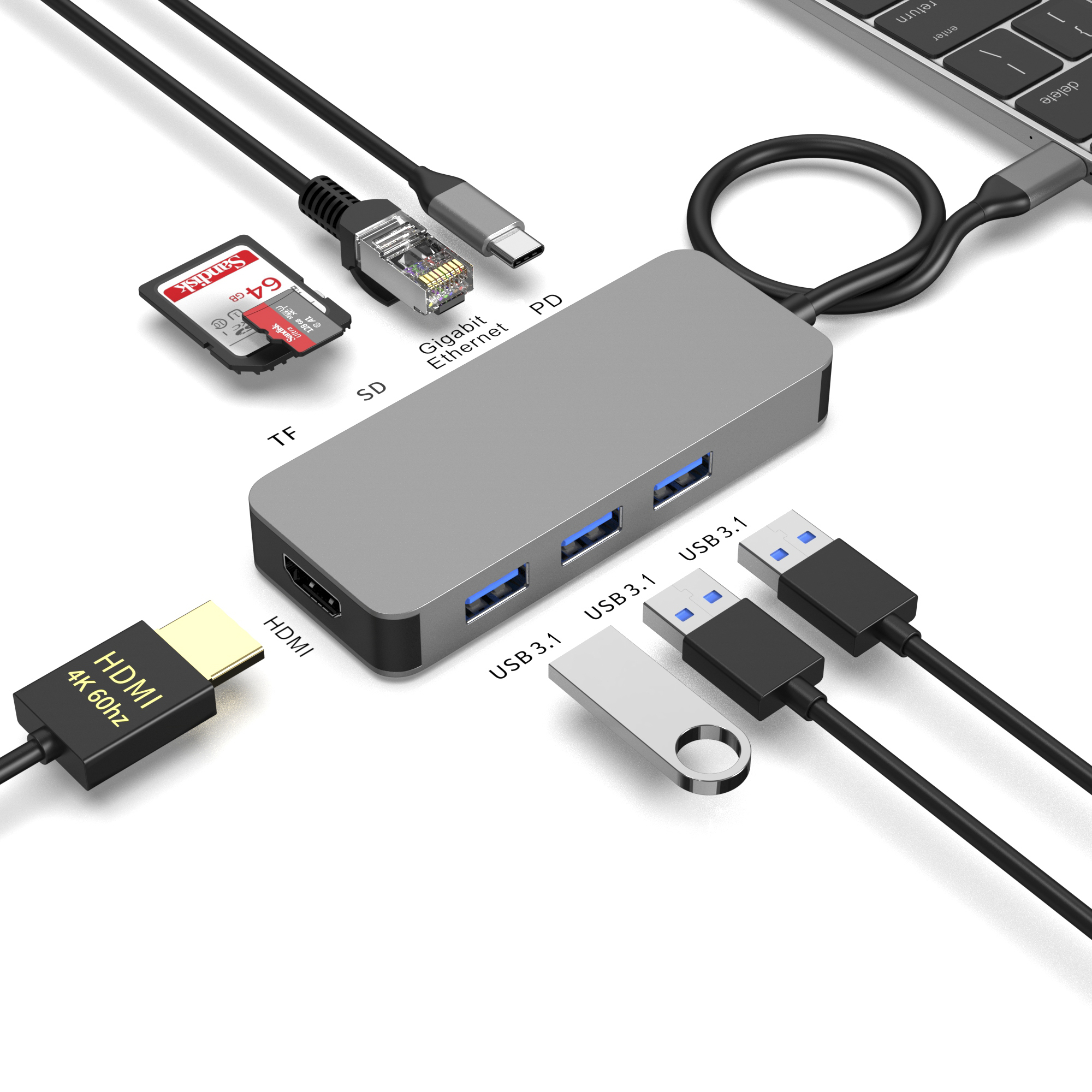
- Protocol Handling: High-end devices process massive data streams concurrently. Can they clearly explain their bandwidth allocation logic? Ask them what happens when USB 3.2, HDMI 4K@60Hz, and PD 100W run simultaneously. Proper firmware engineering prevents display flickering during heavy data transfers.
Mediocre suppliers often fail the protocol handling test. They rely on outdated reference designs. Excellent engineers understand complex Alt Mode protocols deeply. They program intelligent power allocation routines. They include Over-Current Protection (OCP) to shield connected peripherals.
Verifying Certifications and Global Market Compliance
Customs delays happen frequently in global trade. Major retail platforms routinely issue sudden product takedowns. Invalid compliance documentation causes these catastrophic business disruptions. You cannot afford to skip regulatory validation when scaling your brand footprint.
You must check several mandatory standards during your evaluation phase:
- USB-IF Certification: Does the factory produce devices carrying assigned USB Vendor IDs (VID)? Official certification guarantees strict protocol compliance. It protects end-users from unexpected voltage spikes. It ensures seamless interoperability across different operating systems.
- Regional Mandates: You must verify CE for Europe and FCC for the USA. Pay close attention to the EU’s evolving standardization laws. These mandates dictate strict performance parameters. You might also need UKCA marks for British markets. Electromagnetic Interference (EMI) testing remains crucial here.
- Environmental & Safety: Check RoHS compliance for all internal materials. This restricts dangerous heavy metals like lead and cadmium. Require UL certification for any included power adapters. Unsafe power bricks pose severe fire hazards.
Never accept self-reported certifications blindly. Request the technical construction file immediately. You must independently verify all certification numbers directly through the issuing test laboratories. Fraudulent certificates remain common in budget supply chains. Rigorous verification protects your brand reputation immensely.
Supply Chain Resilience: Location, MOQs, and Logistics
Supply chain stability dictates your long-term success. Geopolitical shifts impact import tariffs heavily. You should evaluate where the final assembly actually takes place. Assess the cost and benefit of sourcing from established production centers like Shenzhen. Compare this against emerging manufacturing alternatives located in Vietnam or Taiwan. Proper location strategy navigates import tariffs effectively. It also diversifies your operational risk.
When ordering bulk USB C hubs, review their scalability metrics carefully.
- Minimum Order Quantities (MOQs): Are their MOQs viable for your pilot launch? Standard limits typically range from 1,000 to 3,000 units. You need a partner willing to support early-stage volume. Custom tooling pushes MOQs much higher.
- Component Lead Times: Global semiconductor shortages disrupt production schedules constantly. How does the manufacturer buffer against these shocks? Ask about their strategic inventory policies for critical ICs. Resilient suppliers secure essential chips months in advance.
- Defect Rates & Warranties: Define acceptable AQL (Acceptable Quality Limit) levels clearly in your contract. A standard benchmark might be Major 1.5 and Minor 4.0. Always negotiate strict RMA (Return Merchandise Authorization) terms for defective units. You need clear policies for handling replacements. Establish who pays for return shipping.
Resilient suppliers maintain buffer stock for vital components. They do not pause production whenever a minor supply chain hiccup occurs. Evaluate their warehouse capacity during your initial talks.
The Pre-Order USB C Hub Supplier Audit Checklist
You must transition smoothly from initial vendor vetting to pre-production validation. A structured approach eliminates guesswork entirely. Utilize a comprehensive hub manufacturer checklist before transferring any funds.
We recommend following these critical checklist components closely:
- Business License & ISO Certification: Verify their ISO 9001 (Quality Management) validity first. Then check ISO 14001 (Environmental) documentation. Legitimate businesses maintain these records transparently. Check their registered capital to gauge factory scale.
- Facility Audit: Schedule a third-party or live video verification. Inspect their SMT (Surface Mount Technology) lines and clean rooms closely. Observe their testing stations in action. Look for plug/unplug durability machines, salt spray chambers, and aging test racks. If conducting a virtual USB C hub supplier audit, ask them to demonstrate these tests live.
- Sample Validation (EVT/DVT): Test Engineering Validation Test samples rigorously. Use the exact host devices your target market uses daily. Test them on modern MacBooks, specific PC models, and iPads. You must check for protocol handshake issues yourself. Monitor the current draw during heavy peripheral usage.
- BOM (Bill of Materials) Lock: Demand a strict contractual agreement regarding components. No internal parts like capacitors or chipsets can be substituted post-sample approval. They must obtain your written brand consent before any changes. Unapproved part swapping causes massive failure rates.
Conclusion
Choosing a reliable connectivity partner is never a mere commodity purchase. It represents a vital technical partnership. Your brand relies heavily on their engineering precision. Excellent manufacturing prevents disastrous customer reviews. It ensures your peripherals function flawlessly under heavy workloads.
Before you even begin discussing bulk pricing, take actionable steps today. Request a sample of their current top-tier model. Perform a complete teardown to inspect the PCBA soldering quality thoroughly. Run a brutal 48-hour continuous-load thermal test in your own lab. These physical validations separate exceptional factories from mediocre ones. Secure your supply chain by prioritizing engineering integrity above all else.
FAQ
Q: What is a standard defect rate when ordering bulk USB C hubs?
A: Top-tier manufacturers maintain defect rates well below 1%. Anything above 2-3% indicates poor quality control on the SMT line. It might also point to substandard chipsets. You should establish strict AQL standards in your contract before mass production begins.
Q: How do I conduct a USB C hub supplier audit without visiting the factory?
A: You can hire local third-party inspection agencies like SGS or TÜV Rheinland. They conduct thorough on-site capability audits for you. They verify ISO certifications and perform pre-shipment inspections. Live video tours of the SMT lines also provide valuable secondary verification.
Q: Why do identical-looking off-the-shelf hubs have vastly different wholesale prices?
A: External casing remains very cheap to produce. The cost differences lie entirely in the internal PCBA design. Premium hubs use top-tier main controller ICs and incorporate vital ESD protection chips. Licensing fees for proprietary protocols also drive up the wholesale cost significantly.