For IT procurement and supply chain managers, securing hardware is rarely just about unit price. The true financial impact hinges on capital efficiency and deployment timelines. When planning a Docking Station Bulk Order, a natural tension emerges. The balance between Minimum Order Quantity (MOQ) and production lead time dictates your hardware rollout scale. Overcommit on volume, and you tie up vital cash flow in depreciating tech assets. Underestimate delivery times, and you stall critical office upgrades.
Navigating these variables requires moving beyond basic vendor quotes. You must understand manufacturing realities and supply chain risks. We will explore contractual levers available during the procurement process. You will learn how to balance volume commitments against rapid deployment needs. This guide breaks down exactly how to structure your purchasing strategy. We reveal the hidden timelines behind factory production schedules. You will walk away ready to negotiate better terms and secure reliable hardware pipelines for your organization.
Key Takeaways
- Standardizing a bulk docking station order around off-the-shelf SKUs minimizes lead times but limits specific enterprise configurations.
- Custom dock production drastically alters both MOQ requirements and delivery timelines due to dedicated tooling and chipset sourcing.
- Buyers must map their deployment schedule against OEM dock lead time realities to avoid costly operational bottlenecks.
- Effective procurement relies on negotiating split deliveries and buffer stock rather than simply pushing for artificially low docking station MOQs.
The Economics of a Docking Station Bulk Order: MOQ vs. Capital Allocation
High minimums lock up your working capital. They expose you to inventory obsolescence. Tech standards move rapidly. If you store units for two years, ports become outdated. Conversely, small orders create problems too. They drive up per-unit costs. They create freight inefficiencies. Shipping half-empty pallets wastes budget. Procurement teams must frame this as a capital allocation problem. You are not just buying hardware. You are managing cash flow across a deployment timeline.
Several underlying drivers dictate factory minimums. You must evaluate these drivers carefully. Understanding them gives you leverage during negotiations.
- Component Scarcity: High-tier components naturally command higher manufacturer minimums. Premium DisplayLink chipsets dictate massive production runs. Thunderbolt 4 controllers face similar constraints. Chipset manufacturers force these minimum volume thresholds on dock assemblers. The factory simply passes this docking station MOQ requirement down to you.
- Standard vs. Bespoke: Off-the-shelf configurations offer great flexibility. You avoid costly setup fees. Factories keep standard components in stock. Custom branding requires higher baseline commitments. Firmware tweaks demand engineering hours. Specific port arrays force the factory to retool the production line. They need high volume to justify this setup time.
Success means aligning volume commitments with phased deployment needs. Do not blindly accept standard pricing tiers. Map your orders to actual office upgrade schedules. If you need five thousand units over two years, negotiate a master contract. Do not order all five thousand units for immediate delivery. We will discuss split shipments later in this guide. For now, focus on matching order sizes to actual deployment capabilities. This preserves capital. It also ensures you deploy the latest firmware versions.
Common Mistake: Buyers often hyper-focus on lowering the MOQ per order. This frequently backfires. Factories might agree to a low MOQ but substitute cheaper, uncertified power delivery chips to maintain their margins. Always prioritize component quality over artificial volume reductions.
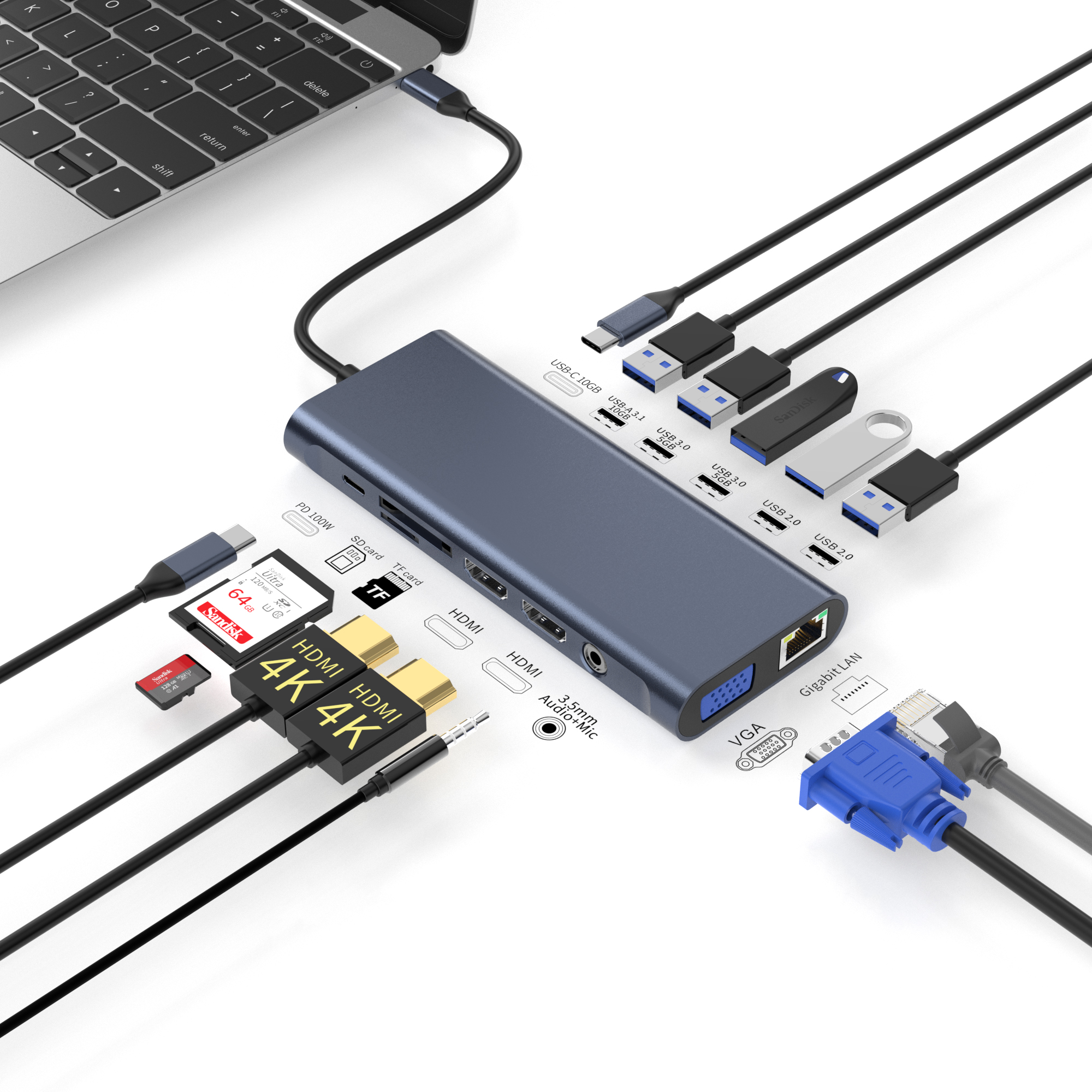
Deconstructing OEM Dock Lead Time in Enterprise Procurement
Quoted delivery times are highly deceptive. They are never a single monolithic block. Smart buyers break them down. Procurement teams must understand the underlying timeline phases. This helps you accurately forecast rollouts. It also helps you spot vendor bluffs. If a factory promises an impossibly fast turnaround, you will know exactly which corners they are cutting.
A standard hardware production cycle follows strict chronological steps. Skipping steps introduces massive risk to your IT network. Let us examine the actual phases driving an OEM dock lead time.
Standard Factory Production Timeline Breakdown
| Production Phase | Estimated Duration | Key Activities & Bottlenecks |
| Sourcing | Weeks 1-4 | Integrated Circuit (IC) allocation. Raw material procurement. PCB board fabrication. Delays here stem from global chip shortages. |
| Manufacturing & Assembly | Weeks 4-6 | Surface Mount Technology (SMT) processes. Components are soldered to boards. Physical casing assembly. Port alignment checks. |
| QA Testing & Compliance | Weeks 6-8 | Burn-in testing. Power delivery stability checks. Environmental stress tests. Skipping this phase causes high failure rates. |
| Logistics & Customs | Weeks 8+ | Ocean freight takes roughly four to six weeks. Air freight saves time but drastically increases landing costs. Customs clearance adds days. |
Use this breakdown as an evaluation lens. Scrutinize vendors promising exceptionally short lead times for bespoke configurations. Verify their claims. Ask them detailed technical questions. Do they rely on existing pre-certified PCBA boards? If so, faster delivery makes sense. Are they skipping rigorous QA? If they omit burn-in testing, reject the vendor immediately. Deploying untested power delivery hardware risks damaging expensive enterprise laptops.
Best Practice: Ask your supplier for their detailed QA checklist. Reputable manufacturers gladly share their testing protocols. They will document environmental stress tests. They will prove power delivery compliance. Transparency during this phase indicates a trustworthy manufacturing partner.
Navigating the Trade-Off Matrix for Custom Dock Production
IT buyers face three main solution categories. White-label units represent standard molds. Co-branded units add company logos. Fully bespoke designs require comprehensive engineering. Each path alters your volume requirements. Each path shifts your delivery timeline. You must weigh the risks and rewards carefully.
White-label options utilize standard consumer-grade molds. Factories produce them continuously. They keep generic stock available. Co-branding requires minor adjustments. They silkscreen your logo onto the casing. This adds slight delays. The final path is custom dock production. This involves specific MAC address pass-through requirements. You might demand custom security housings. You might need specialized Wake-on-LAN features. This path demands the highest volume commitments.
Production Scenario Comparison
| Criteria | Scenario A: Low MOQ / Fast Delivery | Scenario B: High MOQ / Extended Delivery |
| Hardware Design | Standard consumer-grade molds. Fixed port arrays. No structural changes allowed. | Fully custom housings. Specialized security features. Unique port configurations. |
| Ideal Use Case | Immediate, small-scale office expansions. Urgent remote worker onboarding. | Enterprise-wide standardization. Specialized network security requirements. |
| Cost Structure | Higher per-unit cost. Zero engineering fees. Zero retooling fees. | Lower per-unit cost at scale. High upfront NRE (Non-Recurring Engineering) fees. |
| Firmware Control | Generic firmware. Minimal IT administrative control over device behavior. | Bespoke firmware. Full integration into enterprise endpoint management systems. |
Always factor in a time buffer. Add an additional fifteen to twenty percent to the quoted timeline. Initial custom batches face unexpected hurdles. Firmware often requires several iterations. Compliance certifications take significant time. CE, FCC, and RoHS testing agencies move slowly. If a unit fails an emission test, the factory must adjust the shielding. Then, they restart the certification clock. Plan for these delays to protect your deployment schedule.
Strategies to Mitigate Supply Chain Risk During Rollout
Delays in hardware delivery stall remote work onboarding. They postpone facility upgrades. This creates cascading IT expenses. Employees sit idle without proper connectivity. Endpoint security suffers when using temporary, unmanaged hubs. You must implement robust frameworks to mitigate these supply chain risks.
You cannot control global shipping lanes. You can control your procurement structure. When scheduling a bulk docking station order, use advanced inventory tactics. These frameworks protect your budget and your timeline.
- Phased Delivery Agreements: Negotiate a master contract for a high volume. This secures favorable tier pricing. However, execute split shipments. Stagger deliveries monthly. This strategy manages your warehouse footprint. You avoid massive upfront capital drains. You pay as inventory ships.
- Vendor-Managed Inventory (VMI): Assess your manufacturer's warehousing capabilities. Can they hold buffer stock? VMI agreements shift the storage burden to the supplier. You draw from this stock for ongoing SLA replacements. You use it seamlessly for phase-two rollouts. This guarantees immediate hardware availability without bloating your local inventory.
- Component Standardization: Reduce supply chain risks through smart engineering choices. Select designs utilizing widely available secondary-sourced chips. Avoid proprietary, single-source controllers. If the primary power delivery chip faces shortages, the factory swaps to a pre-approved secondary option. Production continues smoothly. Your delivery timeline remains intact.
What to watch out for: When negotiating split shipments, define the storage fees upfront. Some factories hide warehousing costs in the final freight invoice. Ensure your master agreement explicitly states who bears the holding cost for staggered deliveries.
Structuring the Procurement Contract and Next Steps
Evaluating suppliers requires looking beyond the initial spec sheet. Do not award contracts based solely on the lowest quote. You need contractual safeguards. You need leverage when things go wrong. A strong procurement contract protects your organization against market volatility.
Define clear SLA penalties for delivery overruns. If the factory misses the shipment date, enforce a pre-negotiated discount. This keeps their production managers accountable. Next, lock in your pricing. Ensure your volume commitment ties directly to a guaranteed fixed price. The global IC market remains volatile. Chip prices fluctuate weekly. A fixed-price contract shields your budget from sudden component price spikes.
Demand total transparency regarding sub-tier suppliers. You need to know exactly where the factory sources core controllers. If they buy from unauthorized brokers, you face counterfeit risks. Ask for their official supplier list. Legitimate manufacturers proudly display their authorized distributor partnerships.
Actionable Next Steps for IT Buyers
- Request a Golden Sample: Never commit to full production based on a prototype. Demand a final Golden Sample. Test it extensively in your live IT environment. Check compatibility across all laptop models. Verify network pass-through speeds. Validate multi-monitor refresh rates.
- Establish a BOM Lock: Sign a firm Bill of Materials (BOM) lock agreement. This prevents component swapping mid-production. Factories sometimes substitute cheaper chips to increase margins. This causes silent failures across enterprise networks. A BOM lock ensures unit number five thousand matches unit number one exactly.
- Plan Hybrid Freight: Accelerate your initial rollout using hybrid logistics. Ship the first twenty percent via air freight. This covers immediate onboarding needs. Ship the remaining eighty percent via ocean freight. This optimizes your overall landed cost while meeting urgent deadlines.
Conclusion
Balancing volume commitments against production timelines remains a core risk-management exercise. A successful hardware rollout requires strategic alignment. IT must clearly define technical requirements. Procurement must enforce capital constraints. You achieve this balance by understanding factory timelines and negotiating split deliveries.
Avoid vendors promising impossibly low volumes alongside rapid delivery. These offers typically mask severe quality compromises. They skip burn-in testing. They use uncertified components. Instead, prioritize transparent manufacturers. Choose partners who provide clear Bill of Materials documentation. Select factories offering realistic production schedules. Structured contracts, phased deliveries, and rigorous pre-production testing guarantee your deployment succeeds smoothly. Manage the supply chain proactively, and your organization will scale its hardware infrastructure without costly disruptions.
FAQ
Q: What is a standard docking station MOQ for enterprise orders?
A: Standard white-label orders typically range from 100 to 500 units. These use existing molds and standard components. Conversely, OEM or custom production usually requires 1,000 or more units. Factories need this higher volume to cover dedicated tooling, engineering time, and specialized compliance certification costs.
Q: How can we accelerate OEM dock lead times without compromising quality?
A: Utilize semi-custom approaches. Modify existing pre-certified boards rather than starting entirely from scratch. This saves weeks of engineering and certification time. Additionally, prioritize hybrid shipping. Send an initial partial batch via air freight for immediate deployment, while the remaining units ship cost-effectively via ocean freight.
Q: Does customizing ports impact the required bulk docking station order size?
A: Yes. Swapping basic USB-A ports for high-bandwidth standards, like Thunderbolt or specialized LAN controllers, fundamentally alters the Bill of Materials. High-tier chipsets trigger specific component supplier minimums. The manufacturer must purchase these chips in bulk, passing the volume requirement directly onto you.