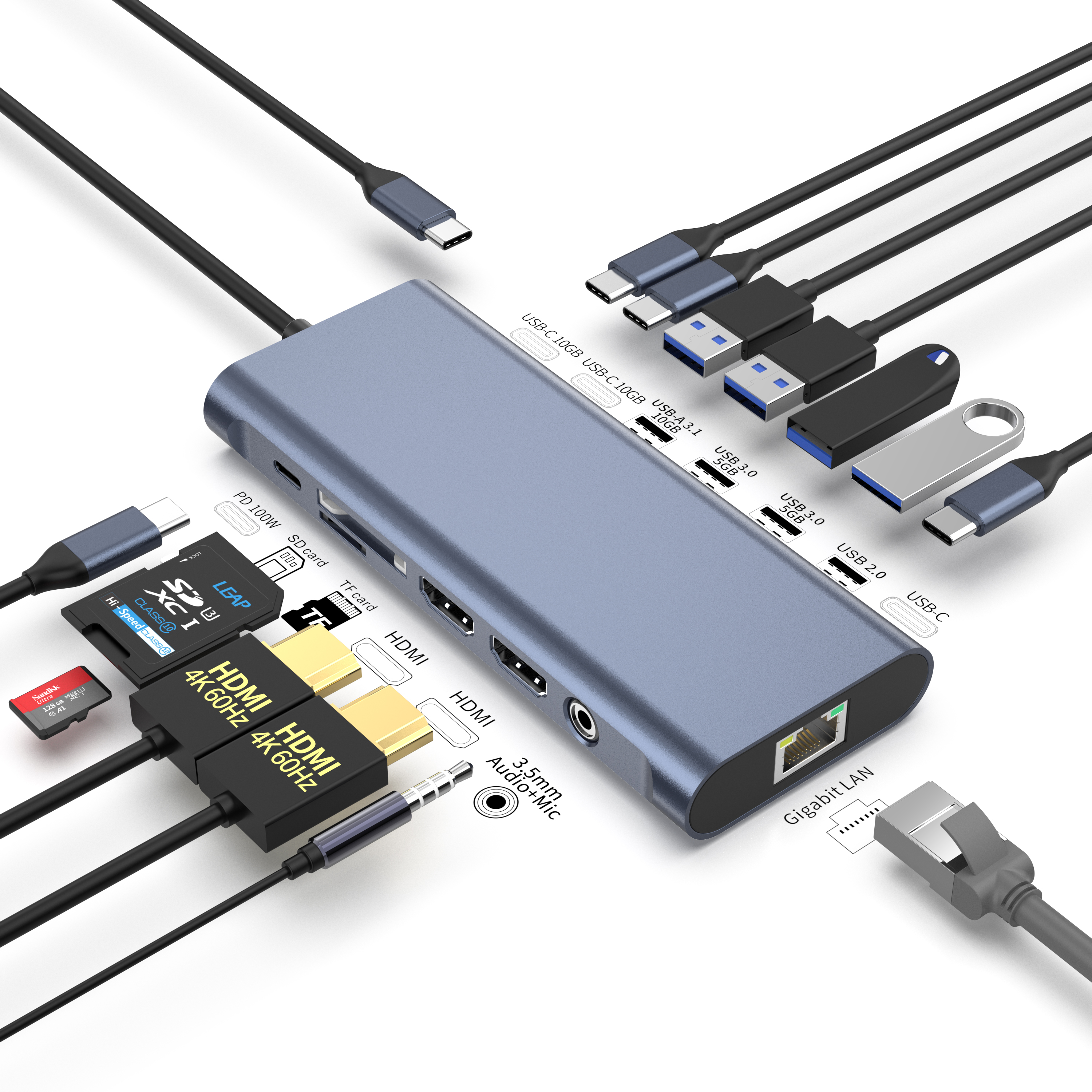
The global shift to USB-C standardizes connectivity across modern consumer electronics. This shift creates a massive, high-demand market for multi-port adapters. However, it also generates a saturated landscape of low-quality generic hardware. High return rates and severe brand damage are the immediate consequences of blindly sourcing products. Subpar chipsets, fake power delivery ratings, and thermal throttling issues ruin the end-user experience. They damage connected devices and invite disastrous customer reviews.
This guide outlines a structured, risk-mitigated approach to evaluating suppliers. You will learn to test hardware thoroughly and secure a reliable manufacturing partner. We provide the blueprint to launch a profitable, fully compliant branded hub. By applying these standards, you protect your brand equity and maximize retail margins.
Key Takeaways
Differentiating your brand requires moving beyond off-the-shelf white labeling to specifying chipset quality and exact port configurations.
Partnering directly with a verified multiport hub OEM rather than a trading company improves margin control and technical support.
Thorough sample testing—specifically for thermal management and sustained Power Delivery (PD)—is non-negotiable before committing to Minimum Order Quantities (MOQs).
Verifiable compliance (CE, FCC, RoHS) must be established early to prevent customs seizures and e-commerce listing suspensions.
The Hidden Costs of Poor Sourcing in Laptop Accessories
Many businesses rush into the electronics market without understanding the underlying hardware. They dropship or blindly brand generic hubs. This careless approach often results in devastating 15%+ return rates. Users experience frustrating connectivity drops during video calls. They also face severe overheating issues during heavy file transfers. These functional failures destroy consumer trust immediately.
A reliable private label USB-C hub acts as a direct gateway to your brand. Think carefully about the liability involved. A cheap hub frying a user's expensive laptop motherboard creates catastrophic liability. It invites negative reviews and potential lawsuits. Conversely, a stable device builds a repeat buyer. You can easily upsell satisfied buyers on other premium accessories later.
To avoid these pitfalls, you must define strict benchmarks. You cannot rely on hope or factory promises. We recommend tracking specific performance metrics from day one.
Defect Rate Target: Achieve a sub-2% overall defect rate across all production batches.
Profitability Metric: Secure a minimum 60% gross margin at retail to fund marketing efforts.
Supply Chain Stability: Maintain reliable inventory lead times regardless of seasonal demand spikes.
Defining Your Product Tier: Technical Specifications That Matter
You must align your technical specifications directly with your target audience. Feature-to-outcome mapping clarifies your product tier. Do not leave crucial design decisions to the factory.
First, evaluate the display output capabilities. Differentiate clearly between a budget 4K@30Hz output and a premium 4K@60Hz output. Always specify the strict requirement for DisplayPort (DP) Alt Mode compatibility. Users expect smooth, flicker-free video playback on modern monitors.
Second, define Power Delivery (PD) limits accurately. Clearly state the exact pass-through wattage you require. You might choose 60W for budget models or 100W PD 3.0 for power users. You must also verify if the hub itself consumes excessive power. Engineers call this parasitic draw. High parasitic draw frustrates users because their laptops charge too slowly while connected.
Third, clarify your data transfer rates. Outline your USB 2.0 (480Mbps) versus USB 3.0/3.2 (5Gbps to 10Gbps) expectations per individual port. Document this explicitly before requesting a quote.
Port Specification and Component Guidelines
Feature Category
Budget Tier Specification
Premium Tier Specification
Expected User Outcome
Display Output
4K@30Hz (HDMI 1.4)
4K@60Hz (HDMI 2.0 / DP 1.4)
Smooth monitor refresh rates for creative professionals.
Power Delivery
60W Pass-through (High parasitic draw)
100W PD 3.0 (Optimized power routing)
Rapid laptop charging while using power-hungry peripherals.
Data Ports
USB 2.0 (480Mbps)
USB 3.2 Gen 2 (10Gbps)
Instantaneous large file transfers for external SSDs.
Internal Chipset
Unbranded / Generic ICs
VIA Labs, Realtek, Cypress
Universal compatibility across Mac, Windows, and ChromeOS.
Chipset stability dictates performance across complex software ecosystems. Require full transparency on the internal Integrated Circuits (ICs). Top manufacturers use highly reliable chips. Quality chips ensure seamless cross-device compatibility. They prevent random disconnects when switching between operating systems.
Thermal management prevents severe performance throttling. Adapters generate significant heat under maximum electrical load. Outline strict requirements for premium aluminum alloy casings. You should also demand internal heat sinks for top-tier models. Effective cooling protects the internal components and extends the lifespan of the laptop accessories supplier hardware.
How to Vet a Reliable USB-C Hub Supplier
Distinguishing between a legitimate factory and a middleman trading company is vital. Trading companies add unnecessary markups. They also complicate direct communication regarding technical issues. You must audit their business license thoroughly. Check their export records carefully. This ensures they actually manufacture the Printed Circuit Board Assembly (PCBA) in-house.
Partnering directly with a verified USB-C hub supplier gives you operational control. It improves gross margins and guarantees responsive technical support. Evaluate their production capacity and long-term scalability closely. Do they utilize automated Surface-Mount Technology (SMT) lines? Automated lines ensure highly precise component placement. Conversely, relying on inconsistent manual soldering increases defect rates significantly.
Examine their Quality Control (QC) processes next. Request their internal standard operating procedures for hardware stress-testing. A competent partner executes several standardized evaluations.
Mechanical Stress Testing: Conducting automated 10,000+ plug and unplug lifecycle tests on all physical ports.
Environmental Testing: Using a thermal chamber to simulate harsh operating environments and measure component degradation.
Compatibility Testing: Maintaining a dedicated lab with dozens of host devices spanning Apple, Lenovo, HP, and Dell ecosystems.
Security and compliance cannot be a mere afterthought. Demand valid, independently verifiable test reports for CE, FCC, RoHS, and UKCA. Counterfeit certificates lead to immediate e-commerce listing suspensions. Furthermore, check for official USB-IF membership or certified connector usage. This critical step helps avoid dangerous protocol conflicts.
Navigating MOQs, Customization, and Unit Economics
Scaling your electronics brand involves navigating various customization levels. Each integration level carries different financial risks and Minimum Order Quantities (MOQs). Understand these tiers before soliciting factory quotations.
The Three Tiers of Hardware Customization
Customization Tier
Scope of Changes
Estimated MOQ
Risk Profile
Level 1 (White Label)
Laser-engraving a logo on an existing factory mold. Basic packaging.
500 - 1,000 units
Low Risk / Fast Time-to-Market
Level 2 (High Differentiation)
Custom shell colors, specific braided cables, bespoke retail packaging.
1,000 - 2,000 units
Medium Risk / Stronger Brand Identity
Level 3 (Full ODM)
Engineering a completely new port layout, shell design, and custom PCB.
3,000+ units
High Risk / Maximum Differentiation
Level 1 presents low risk for market testing. You get to market quickly using proven hardware. Level 2 offers high visual differentiation for a standard wholesale USB-C adapter. You can command a higher retail price by elevating the unboxing experience. Level 3 represents full original design manufacturing. A highly specialized custom USB-C hub requires significant upfront tooling fees. You will also face longer development cycles.
You must calculate your final landed cost accurately. Factor in the Ex-Works (EXW) unit price first. Add your custom packaging upgrade costs. Then, include freight forwarding fees, warehouse transit, and local import tariffs. Accurate calculations ensure your retail pricing remains competitive yet profitable.
Negotiate standard risk-averse payment terms. A universally accepted structure is a 30% TT (Telegraphic Transfer) deposit. You pay the remaining 70% before shipment. However, only release this final payment after a third-party inspection agency passes the batch. This protocol protects your working capital.
Sample Testing and Shortlisting Logic
Never approve mass production based purely on a well-designed PDF spec sheet. You must follow the "Golden Sample" protocol. Order initial engineering samples from three to four shortlisted factories. A reliable multiport hub OEM will gladly provide samples for your technical evaluation.
Conduct rigorous in-house stress testing on every single sample received. Do not treat them gently. Follow a strict, standardized evaluation process.
Maximum Load Simulation: Run all available ports simultaneously. Output a 4K HDMI video stream, transfer a 50GB folder via USB-A, and charge a laptop via the PD port all at once.
Disconnection Monitoring: Watch carefully for unexpected peripheral disconnects. Screen flickering or drive dropouts indicate unstable firmware or poor internal bandwidth allocation.
Thermal Inspection: Use an infrared (IR) thermometer to measure exterior casing heat. Measure the surface temperature after one full hour of continuous maximum load. Temperatures exceeding 48°C often indicate an inadequate thermal design.
Power Negotiation Check: Use an inline USB-C power meter. Verify the hub correctly negotiates the advertised PD wattage without drawing excessive parasitic power.
Watch out for subtle red flags during this evaluation phase. Some unethical suppliers silently swap the chipset. They might submit a premium Realtek chip in the sample but quote mass production using a cheaper generic IC. They do this without disclosure to artificially lower the unit price. Always open the sample casing yourself. Verify the internal IC markings match the official quotation exactly.
Conclusion
Sourcing a successful private label multi-port adapter requires shifting your mindset. You must move away from hunting for the absolute lowest unit price. Instead, prioritize component stability, verifiable compliance, and stringent factory QC procedures. This strategic focus ensures long-term profitability and protects your brand reputation.
Finalize your internal technical specifications document thoroughly before reaching out to suppliers. A detailed requirement sheet quickly filters out unqualified trading companies and subpar factories. It establishes your brand as a professional, serious buyer from the very first interaction.
Begin compiling your Request for Quotation (RFQ) today. Incorporate your required port array, strict PD limits, and exact HDMI resolutions. Send this RFQ to carefully vetted factories to start the golden sample process.
FAQ
Q: Can I use a supplier's existing FCC/CE certificates for my private label brand?
A: Yes, but you cannot simply copy the certificate. You typically need a "Multiple Listing" or a formal authorization letter from the factory. This document officially links your specific brand name to their original test reports. Amazon and other major platforms require this proof to approve your electronics listing.
Q: What is the standard manufacturing lead time for an OEM device?
A: For existing factory molds utilizing basic custom branding, expect a production window of 25 to 35 days. However, for full custom ODM designs requiring brand-new PCB layouts and plastic tooling, lead times routinely extend to 60 or even 90 days.
Q: Why does my sample drop the HDMI connection when I plug in a high-draw USB device?
A: This symptom indicates poor power management or an inferior chipset architecture inside the device. The internal controller cannot properly allocate bandwidth and voltage simultaneously. This is a critical hardware red flag that warrants immediately disqualifying the supplier from your shortlist.